
Brazil Blitz Rio de Janeiro tour
6 days US$1975 per person
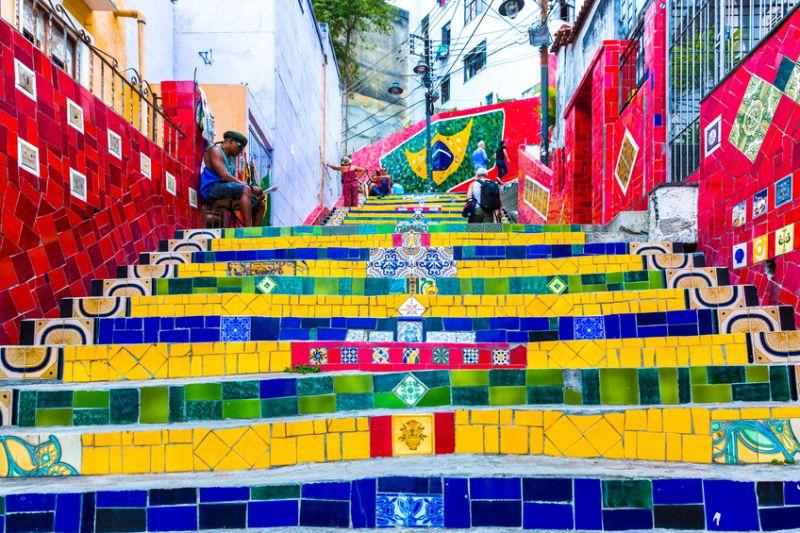
All Southern Crossings tours can be custom-made to fill your travel requirements. Contact us for a custom tour and quote.
Depart any day on Rio de Janeiro tour and customize your Brazil tour at no extra charge!
Get a taste of this exciting South American country
On this incredible six-day Rio de Janeiro tour. Explore the seductive city of Rio de Janeiro, visit the world famous Christ the Redeemer statue, one of the New Seven Wonders of the World, as well as the Sugarloaf Mountain and get an incredible insight into the Carnival celebration that Brazil is famous for, as well as a hike to Rio’s secluded beaches.
Day 1
Arrive in Rio de Janeiro.
Day 2
Christ Statue (Cristo Redentor) and Tijuca forest excursions.
Day 3
Sugar Loaf Mountain (Pão de Açúcar) tour.
Day 4
Carnival tour experience.
Day 5
Beach hike.
Day 6
Departure day.
What’s included in the trip
- Private airport pickup at the beginning of trip and drop off at end of the trip.
- Southern Crossings bilingual guides.
- All other internal transport excluding transport to optional restaurants, sights and extra excursions.
- All entrance tickets for sites on the tour.
- Five nights of 4-star hotel accommodation
- Breakfast included with all hotel stays.
- Private Tour of Tijuca National Park.
- Private Christ the Redeemer tour .
- Private Sugarloaf Mountain tour with cable car transportation.
- Samba school tour
- 24-hour customer support line while on tour.
What’s not included
International flight to/from Lima, pre- & post- tour accommodation, visas, vaccinations, personal insurance, meals except where specified above, drinks, laundry, souvenirs, tips while on optional excursions and other items of a personal nature. Medical travel insurance is not included through Southern Crossings, cancellation insurance is advisable.
Detailed trip itinerary
Day 1
Arrive in Rio anytime today and private transfer to your hotel. If arriving in the day, there will be some free time to go out and get acclimatized to the city. If arriving late at night, you will transfer to your hotel for some rest before embarking on the tour.
Day 2
This morning we visit Corcovado Mountain to visit one of the seven wonders of the world, the Christ Statue. This tour begins in Cosme Velhos neighborhood from where the cog train starts a trip through the Tijuca Forest, the largest urban forest in the world, up to the Christ the Redeemer statue that stands tall over the city of Rio de Janeiro. Once there, take in and enjoy a panoramic and extraordinary view of Rio, see the Sugar Loaf, the Guanabara Bay, the beaches of Southern Zone and the Rodrigo de Freitas lagoon. After the visit of the Corcovado, the tour will continue to So Conrado area with a brief stop at the Pepino beach.
Day 3
In the afternoon we visit the famous Sugar Loaf Mountain by cable-car. The cable car trip is in two stages: The first goes to Urca Hill, 220 meters high, and then a short walk to the other side leads you to the second station for the next part of the ride, up to the top of Sugar Loaf itself. From at 396 meters high, there we can take in some spectacular views of the surrounding sights and of the ocean bay. We will also get a better, clearer look of the Christ the Redeemer statue on the other side of the town. The top of Sugar Loaf has been landscaped and includes several pathways and a bar. At the end of the afternoon return to your hotel.
Day 4
This morning we go behind the scenes of the famous Rio de Janeiro carnival. We begin the tour at the historic site where large groups of African slaves arrived. You will find out how they invented samba music, the heartbeat of present day carnival. We then visit the barracão (atelier of the samba school) where the preparations for the coming carnival are in full swing. You will see up close and personal the formation of a new carnival float. We also have the chance to partake in a workshop in a small group, led by experienced designers of the samba school. You will create your own carnival adornment, such as a mask, a doll or a hat, and take home your final work as a souvenir from Rio de Janeiro. Afternoon and evening at leisure.
Day 5
Apart from the famous Copacabana beach and all the other city beaches, like Ipanema and Leblon, Rio de Janeiro has some secluded beaches in natural reserves where you feel miles away from bustling city life. This tour takes you to Prainha and Grumari, beaches in the ecological reserve, still within city limits. During the week it has the feel of a private beach. There is a small trail nearby the beach, going into the ecological reserve. We go into the forest and up to a panoramic viewpoint over the beaches. If you don’t want to do the hike, you can opt for the seafood lunch in a local restaurant, where you really forget you are actually in a metropolitan
Day 6
All good things must come to an end, and today you´ll have a private transfer to the airport for your international flight. Flights may depart any time today.

Extra activities
Add extra activities such as river rafting, horseback riding, mountain biking, hiking, climbing, surfing and free days to your custom itinerary. Ask about these options and we’d be happy to add them to your quote. If you have any special requests or interests like birding, cooking or crafting that you would like to explore please let us know!
Single Person Supplement
A single supplement will be added to your quote if you are travelling alone.
Joining the tour
On all Southern Crossings tours, you are met at the airport by one of our representatives, who will accompany you to our joining hotel. No bargaining or being swindled by airport taxis.
Pre-trip planner
Climate
The climate in sites we will visit is as follows: Rio de Janeiro: Rio has a tropical savanna climate that closely borders a tropical monsoon climate and is often characterized by long periods of heavy rain from December to March. In inland areas of the city, temperatures above 40 °C (104 °F) are common during the summer though rarely for long periods, while maximum temperatures above 27 °C (82 °F) can occur on a monthly basis. Nights are cool in Rio. Iguazu: Iguassu Falls experiences a subtropical climate with abundant precipitation and high temperatures year-round. Salvador da Bahia: Temperatures are relatively constant throughout the course of the year featuring warm and humid conditions. The driest period is in February and the wettest months are May to July. Manaus: Rainfall is common all year round. Average annual temperature is 26.6 °C (80 °F) with more or less consistent temperatures all year round.
Money guide
The unit of currency in Brazil is the Brazilian Real. Automatic cash points are available in Rio de Janeiro. Visa, MasterCard, Plus, and Cirrus are the most common usable types of cards. Traveler’s checks are difficult to cash (American Express is best, but you may be charged 5-8% to cash) or a Visa or MasterCard for cash advances are also options. Do not bring Money Grams or International Money Orders as they are extremely difficult to exchange. Banks and exchange houses are available in Rio de Janeiro. For currency, U.S. dollars are recommended and most easily exchanged. Acceptable bills come out of the ATMs in country. Expect to spend about US$45 a day on food, US$2 on a beer, water or soft drink in Brazil. Currency Converter
Required documents Brazil
All travelers to Brazil are required to have a passport valid for at least six months from date of entry. Visas are not required for U.K., New Zealand and most E.U. passport holders (excluding Cypriots, Maltese, Estonians and Latvians). A visa is required for U.S., Canadian and Australian citizens. U.S. citizens, please visit the U.S. state department website Canadian citizens, please visit the Canadian State foreign affairs website and Australian citizens, please visit the Australian department of foreign affairs website. For other nationalities, please consult the nearest Brazilian embassy or consulate. An onward ticket and proof of funds may also be required at entry and should be available to show to immigration. Traveler’s checks, currency or a bank statement from the bank or printed off the internet are sufficient for proof of funds.
Required immunizations Brazil
Brazil is listed by the World Health Organization(WHO) as endemic for yellow fever. Some airlines may require passengers to present a valid Yellow Fever Vaccination Certificate before being allowed to board flights out of the country. If in doubt, check with your airline. If you have travelled to a country that is considered to be in the yellow fever zone you will need to show proof of vaccination at the border of Brazil, failure to produce a valid vaccination card may result in refusal of entry. Travelers may wish to receive hepatitis vaccinations and should be current on all other standard vaccinations. Please consult your physician or local health department for more information.